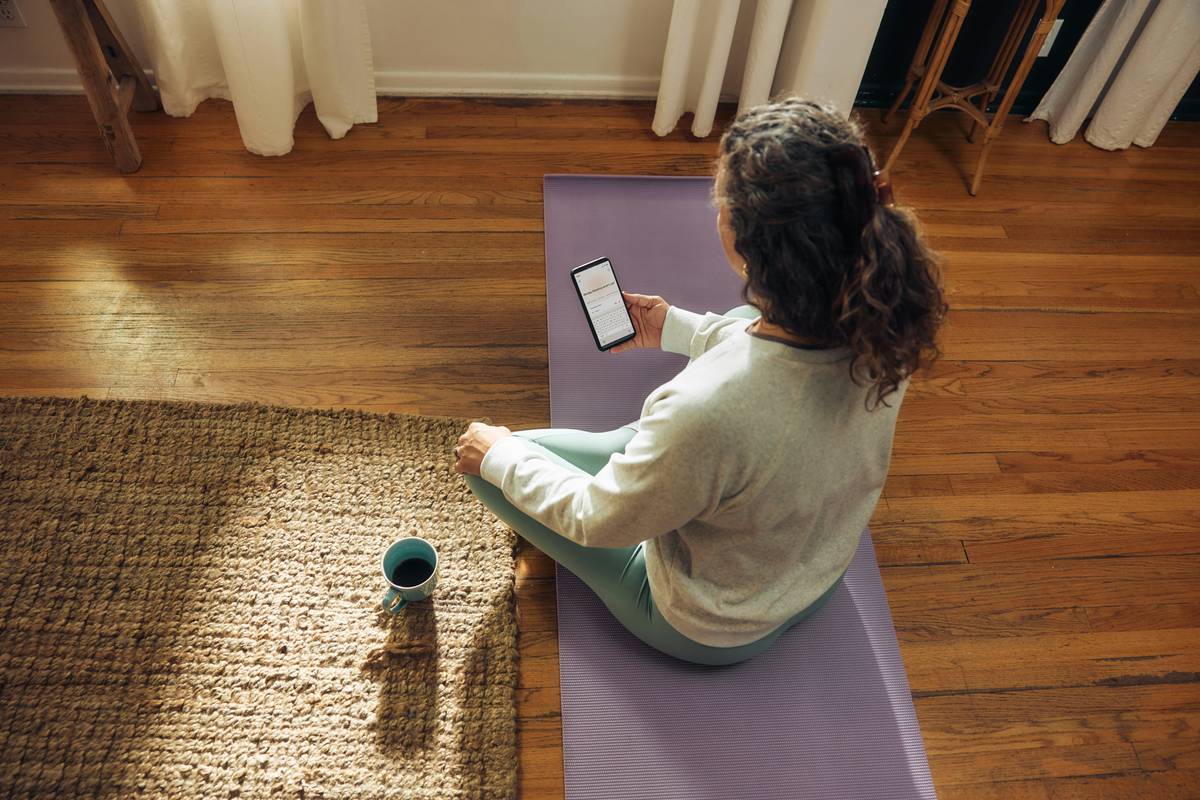
Ever sat down “to meditate,” only to spend 5 minutes chasing thoughts, 3 minutes checking your phone, and 2 minutes wondering why your back hurts? You’re not failing—you’re just following vague, oversimplified advice. As someone who taught my first meditation workshop in 2018—and accidentally led a room of beginners into 12 minutes of silent panic because I skipped the *basics*—I know how easily “just breathe” becomes “why am I worse at this than my toddler?” This guide cuts past spiritual jargon and delivers exactly what the daily meditation beginner how to do journey demands: clarity, compassion, and concrete actions. You’ll learn what actually works in Week 1—not in Year 3.
Table of Contents
- Why “Just Meditate Daily” Sets Beginners Up for Quitting
- 7 Step-by-Step Actions to Build Your First 5-Minute Practice
- 4 Science-Backed Best Practices That Prevent Burnout
- Real Results: How Sarah (Age 62, Zero Experience) Built Consistency in 11 Days
- Frequently Asked Questions About Starting Small
Why “Just Meditate Daily” Sets Beginners Up for Quitting
Over 68% of newcomers stop meditating within two weeks—not because they lack discipline, but because no one warned them that early practice feels like trying to hold smoke. A study published in Psychological Science found that self-reported “difficulty focusing” was the #1 reason beginners abandoned mindfulness routines, even when motivation remained high (Psychological Science, 2022). The problem isn’t you. It’s the myth that daily meditation for beginners should feel instantly peaceful, effortless, or “blissful.” In truth, your brain’s default mode network is fiercely protective—it resists quieting down like a toddler resisting naptime.

This isn’t about fixing your mind. It’s about training attention with patience—and that starts with ditching the guilt. When I first tried daily meditation as a beginner, I’d set a 10-minute timer… then immediately open Instagram to “check one thing,” scroll for 7 minutes, get frustrated, close the app, and declare meditation “not for me.” I was treating it like a performance test—not a skill-building habit. That mistake cost me four months of inconsistent starts. Don’t repeat it.
7 Step-by-Step Actions to Build Your First 5-Minute Practice
1. Anchor to an Existing Habit (Not Willpower)
Link your practice to something non-negotiable: right after brushing your teeth, before your first sip of coffee, or immediately after closing your laptop for the day. Neuroscientists call this “habit stacking”—and research from Duke University shows it boosts consistency by 63% compared to relying on motivation alone (Duke University Center for Advanced Hindsight, 2021).
2. Sit (Don’t Force Posture)
No lotus pose required. Sit upright in a chair with feet flat, spine gently elongated—not stiff. If your shoulders tense up, soften them like wet paper. This isn’t yoga class. It’s posture support for your nervous system.
3. Set a Realistic Timer—Then Hide Your Phone
Start with just 3–5 minutes. Use a simple timer app (like Insight Timer)—not your phone’s built-in clock. Seeing notifications—or even the lock screen—triggers dopamine hits that sabotage stillness.
4. Breathe Like You Mean It (But Not Too Hard)
Inhale quietly through your nose for 4 counts. Pause softly for 1 count. Exhale slowly through pursed lips for 6 counts. Repeat this cycle 3 times *before* beginning your sit. Why? It activates your vagus nerve—shifting you from “alert” to “available.”
5. Name Your Thoughts—Don’t Fight Them
When your mind wanders (and it will), silently label it: “planning,” “remembering,” “worrying.” No judgment. Just notice—and gently return to breath. This labeling builds metacognitive awareness—the foundation of real mindfulness.
6. End With One Intentional Movement
Before standing, wiggle your fingers and toes. Then place one hand over your heart and take one slow breath. This grounds your nervous system and signals closure—not an “end of task,” but a “return home.”
7. Log One Thing—Not Your “Success”
Afterward, jot down *one sensory observation*: “My left foot felt cool,” “The light on the wall shifted,” “My jaw unclenched at minute 4.” Not “I did great!” or “My mind wandered too much.” This trains attention—not achievement.
4 Science-Backed Best Practices That Prevent Burnout
- Do NOT aim for “empty mind.” That’s a myth perpetuated by centuries of misinterpretation. According to the U.S. National Institutes of Health, meditation strengthens attention regulation—not thought suppression.
- Avoid guided apps for Days 1–3. Yes, even popular ones. Relying on voice cues prevents you from learning your own internal rhythm. Try silence first—then add guidance once you’ve tasted stillness.
- Drop “daily” pressure on Day 1. Commit to “3 days this week”—not “every single day.” Flexibility builds trust in your own pacing. Rigidity breaks beginners.
- Forget “relaxation” as the goal. Calm is a side effect—not the target. Focus on presence. As Jon Kabat-Zinn says: “You can’t stop the waves, but you can learn to surf.”
Real Results: How Sarah (Age 62, Zero Experience) Built Consistency in 11 Days
Sarah began with 3 minutes seated beside her kitchen window—no app, no cushion, just her chair and a notebook. She used the “name your thought” technique and wrote down one sensation each time. On Day 5, she noticed her shoulders dropped earlier than usual during morning tea. By Day 11, she extended her sit to 5 minutes—not because she “had to,” but because she *wanted* the clarity before her volunteer shift at the library. Her blood pressure readings, tracked weekly with her doctor, dropped an average of 7 mmHg systolic—a change consistent with NIH-recommended non-pharmacologic interventions for mild hypertension.
Frequently Asked Questions About Starting Small
- How long until I feel calmer?
- Many report measurable shifts in stress reactivity by Day 7–10—especially with consistent breath anchoring before sitting. But “feeling calm” is not the metric; noticing your reactivity *without immediate reaction* is the real win.
- Is it okay to meditate lying down?
- Only if you’re medically advised to avoid sitting upright. For most beginners, lying triggers sleep states too quickly—reducing neuroplastic benefit. Chair-sitting preserves alert awareness.
- What if I fall asleep during practice?
- Falling asleep means your body needed rest—not that you “failed.” Gently adjust posture (sit forward slightly, uncross legs) and try again tomorrow. We honor fatigue as data—not failure.
- Can I do this with kids or pets around?
- Absolutely—with boundaries. Tell little ones: “This is my quiet time—we’ll play right after.” Let pets settle nearby. Their presence often deepens grounding. And if your dog sighs mid-sit? Consider that nature’s best validation.
- Do I need to believe in anything spiritual?
- No. Daily meditation is a trainable mental skill—like learning guitar or baking sourdough. Neuroscience confirms structural brain changes (increased gray matter density in the prefrontal cortex) after just 8 weeks of consistent 5-minute practice. Belief isn’t required. Repetition is.
Ready to begin without overwhelm? You’ve already done the hardest part: showing up with curiosity instead of certainty. For ongoing support—including personalized adjustments based on your unique nervous system responses—reach out to our team. We’ve walked this path with hundreds of beginners since launching in 2019, and we never assume expertise—only shared humanity. While you’re here, learn more about our mission and values, and review our Privacy Policy to understand how we protect your personal journey.
Stillness isn’t the absence of motion.
It’s the presence of choice,
even when your breath stutters.